
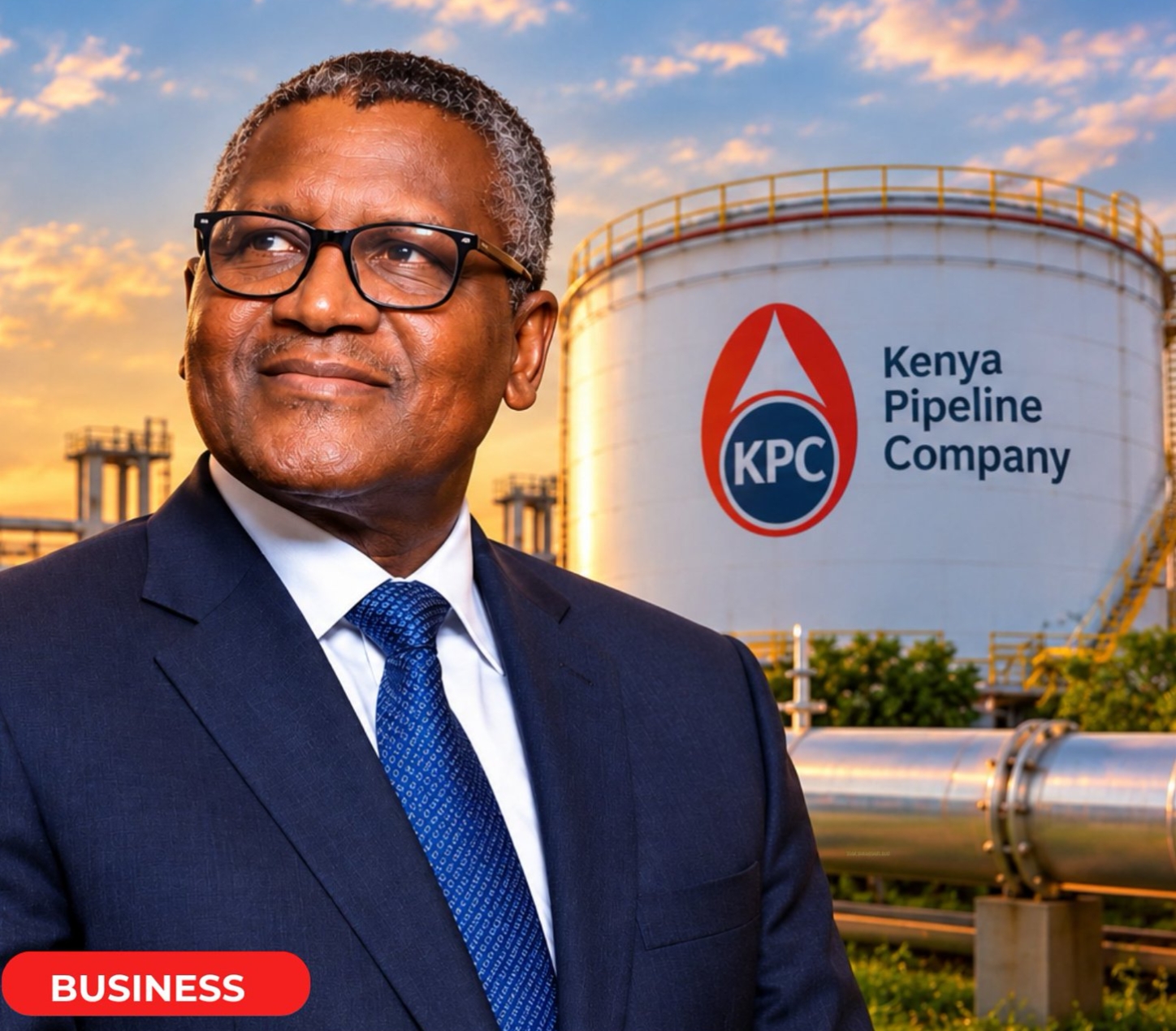
The announcement by Nigerian billionaire Aliko Dangote that his company has acquired a 25% stake in Kenya Pipeline Company (KPC) is a welcome development and a potentially defining moment in Kenya’s energy sector.
Coming at a time when the government is opening up strategic state assets to private investment, this deal offers an opportunity to rethink how Kenya manages its infrastructure, creates wealth and positions itself as a regional economic powerhouse.
For far too long, Kenya has operated businesses owned by the state with disappointing levels of efficiency, productivity and commercial competitiveness. Public ownership should never be an excuse for inefficiency. Where private capital, technology, managerial expertise and commercial discipline can deliver better results, the country must be bold enough to embrace them while protecting the public interest.
Dangote’s entry into KPC is therefore more than an investment announcement. It is an opportunity to inject a new culture of efficiency, accountability and strategic ambition into one of Kenya’s most important energy infrastructure assets. Kenyans should expect measurable improvements in operational efficiency, service delivery, investment and the long term commercial performance of the pipeline network.
The bigger opportunity, however, lies beyond the 25% stake.
Kenya must deliberately expand and modernise its petroleum infrastructure to support its own growing economy and serve the wider Eastern African region. The planned Dangote refinery in Lamu, with a proposed capacity of 700,000 barrels per day, presents an opportunity to rethink the entire regional petroleum supply chain. Its success must be matched by infrastructure capable of transporting petroleum products efficiently from the coast to domestic markets and neighbouring countries.
A strategic priority should be the development of an efficient pipeline connection between Lamu and Kipevu in Mombasa, alongside the expansion and modernisation of the existing pipeline network. This would strengthen the connection between the northern coast, Mombasa’s established petroleum infrastructure and Kenya’s traditional inland markets, while creating opportunities for regional distribution.
Kenya must also look beyond its borders. The pipeline network should be developed as part of a broader regional energy strategy serving Ethiopia, South Sudan and other neighbouring markets. Such investments would strengthen Kenya’s position as a transit and distribution hub, generate revenue, create jobs and attract further investment in storage, logistics, manufacturing and related industries.
It is equally important to reconsider the geographical reach of the Lamu Port South Sudan Ethiopia Transport Corridor, commonly known as LAPSSET. The corridor should be assessed for possible expansion towards Somalia through Wajir and Mandera, connecting northern Kenya to wider regional trade networks. Such an extension could strengthen cross border commerce, open up underserved regions and make infrastructure a genuine instrument of economic integration, peace and development.
The ambition should be clear: Kenya must become the energy capital of Eastern Africa.
This requires a government that thinks beyond the next election cycle and invests in infrastructure that will transform the economy for generations. It requires deliberate coordination between petroleum refining, pipeline transportation, port infrastructure, electricity, renewable energy, industrial production and regional trade. It also requires commercially viable projects, transparent partnerships, sound regulation and an unwavering commitment to public value.
As the Swahili saying goes, Mgala muue haki mpe. Even someone with whom you may disagree deserves their due recognition. President William Ruto deserves credit for pursuing the opening of strategic state assets to private investment and for positioning infrastructure as an avenue for economic transformation. The Dangote investment and the wider energy ambitions associated with Lamu deserve serious national attention.
But this is also where the President must demonstrate the difference between managing the affairs of a country and transforming its economic destiny. Kenya needs leadership that gives priority to large scale, wealth creating initiatives capable of changing the country’s productive capacity. Churches and classrooms have their place in society, but our national ambitions must also include world class energy infrastructure, modern transport corridors, industrial cities, competitive manufacturing and regional economic integration.
Imagine a Kenya that refines petroleum at scale, transports it efficiently across the region, exports energy products, hosts energy intensive industries and earns substantial revenue from infrastructure serving millions of people beyond its borders. Imagine the employment opportunities, foreign investment, technology transfer and new enterprises that such an economy could create.
That is the Kenya we should be building.
Dangote’s investment should not be treated as an isolated transaction. It should be the beginning of a broader national conversation about efficiency, private investment, infrastructure expansion and Kenya’s place in the regional economy. The government must ensure that the public receives fair value from the transaction while the country gains the expertise and investment required to modernise its strategic assets.
Kenya has the geographical advantage, the ports, the entrepreneurial talent and the regional market. What it needs is the ambition and discipline to connect these advantages into a coherent economic strategy.
Dangote may well have arrived at the right moment. The task before Kenya is to turn that moment into a lasting national advantage.
Let us build an economy that works, infrastructure that pays and a country that leads.