
The once-mighty ODM finds itself in an uncomfortable political position: politically outmanoeuvred, internally divided and struggling to define its place in a broad-based political arrangement that increasingly appears to benefit its partners more than itself.
ODM can protest, issue statements and cry foul, but the reality is becoming increasingly difficult to disguise. The party has been pushed into a political corner, caught between accepting what may amount to tokenism within government and walking away in pursuit of the moral high ground. Neither option comes without serious consequences.
The party’s dilemma is that it risks losing its identity if it stays and its political leverage if it leaves. That is precisely the trap that makes Orengo’s earlier counsel so haunting.
ODM’s best political bet may therefore be to resist the temptation of premature alignment, maintain its independence, stand in the middle and negotiate from a position of strength after the elections.
The emergence of UDA and what is increasingly being perceived as its political counterpart, MDG, has further complicated ODM’s calculations. The failed attempt to build Owalo’s version of a People’s Party has not necessarily ended the political contest for Nyanza. Instead, MDG appears to be establishing a presence in a region where ODM has historically enjoyed unquestionable political dominance.
The danger for ODM is not merely the emergence of new political formations. It is the possibility that its traditional support base may gradually begin to imagine a political future beyond the party.
For years, ODM’s greatest asset was not its parliamentary numbers or access to government. It was its loyal grassroots membership, its political identity and its emotional connection with the people. That asset is now facing an unprecedented test.
Perhaps the most consequential development is the growing perception that ODM’s younger political generation is increasingly unwilling to remain trapped in the party’s internal contradictions. Some of its youthful political stalwarts have already moved on, while others appear politically disengaged. The question is no longer simply who remains in ODM, but whether the party can still inspire the next generation of political leadership.
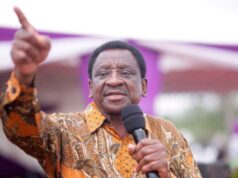
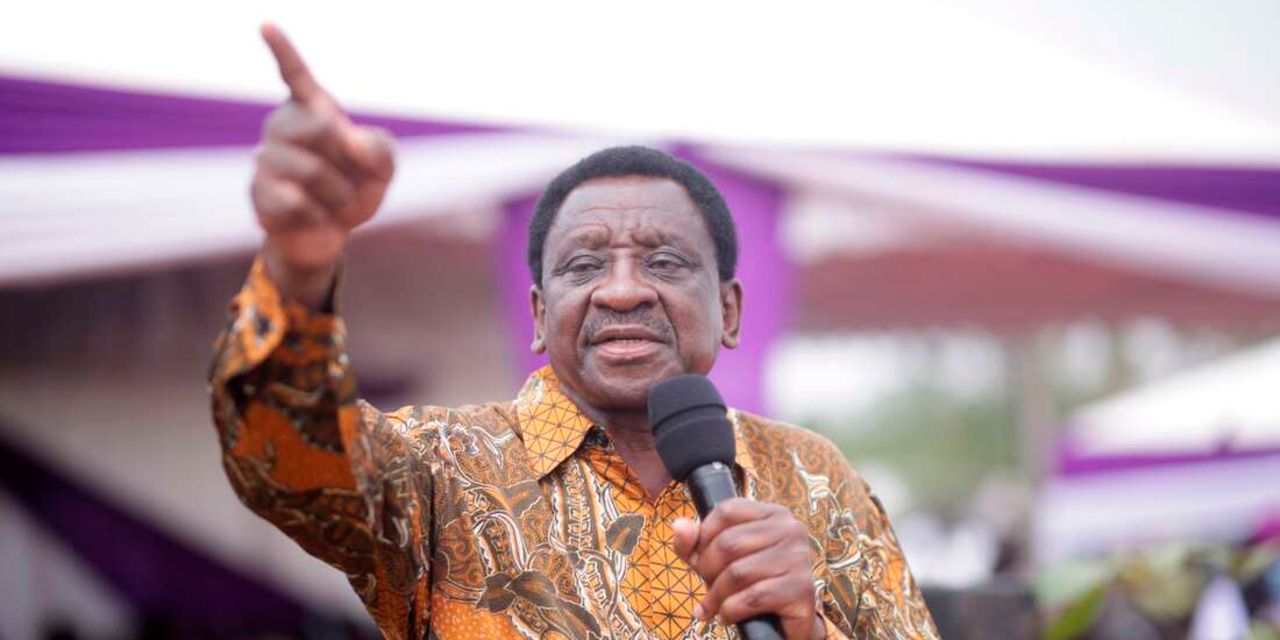
In this unfolding contest, Governor James Orengo may yet emerge as a significant political figure in the search for a new direction in Nyanza. The existence of the New Liberal Democratic Party (LDP), a political vehicle associated with Raila Odinga’s political history, could provide an alternative platform around which a new political conversation might emerge.
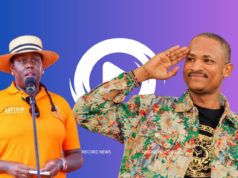
What Orengo and Babu Owino may have recognised, while others were still standing, is that the political ground was shifting beneath ODM’s feet. The question is whether the party’s leadership was prepared to see it.
Orengo’s prediction that the broad-based arrangement would eventually turn against its own partners appears to be gaining political relevance. His warning about the third round of the political contest was not simply about disagreements within government; it was about the inevitable struggle for political ownership, relevance and survival.
And that struggle may now be unfolding at ODM’s expense.
The comparison with KANU is instructive, although ODM’s predicament is arguably more complicated. KANU entered the 2002 elections weakened but still possessed an identifiable political structure and a degree of bargaining power. ODM risks entering the next political contest having surrendered too much of its independent political identity without securing equivalent political returns.
That is a dangerous position for any political party.
The talk of billions of shillings in development allocations and the prospect of benefiting from government arrangements may provide temporary political comfort. But public resources are not a substitute for political legitimacy. Neither can promises of development permanently compensate for the erosion of a party’s identity.
ODM’s greatest wealth has never been the prospect of accessing KSh 12 billion or any other government allocation. Its real wealth is its people, its loyal membership and its ability to mobilise a political constituency around a shared cause.
Once that loyalty begins to fracture, rebuilding it becomes far more difficult than negotiating a government position.
This is why Orengo’s advice deserves a second look.
ODM does not necessarily have to abandon the broad-based arrangement today, nor does it have to surrender its political independence to remain relevant. It can stand in the middle, preserve its identity, consolidate its grassroots support and retain the freedom to negotiate after the elections.
In politics, being in government is not always the same as being in power. And being part of an arrangement does not necessarily mean having control over its direction.
ODM must decide whether it wants to remain a political institution with independent bargaining power or become a junior partner in an arrangement whose political dividends may ultimately accrue elsewhere.
The greatest threat to ODM is not UDA, MDG or even the emergence of a new political vehicle. It is the possibility that the party may lose the very people who made it politically formidable.
Orengo may have seen the storm coming. The tragedy for ODM would be to recognise it only after the damage is irreversible.