
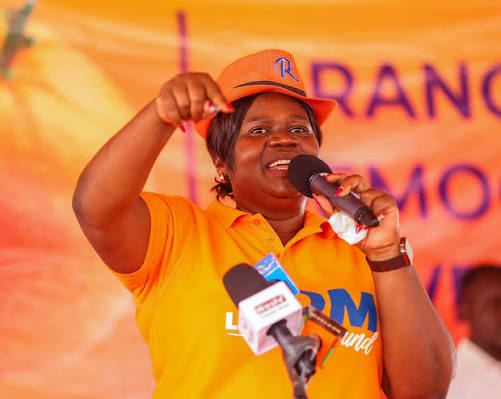
ODM’s weakening political influence, growing divisions in Luo Nyanza and the emergence of well-funded rivals are putting Gladys Wanga’s 2027 ambitions in serious jeopardy.
Gladys Wanga’s dream of becoming William Ruto’s running mate in 2027 is increasingly looking like a long shot. The political ground she needs to stand on is shifting, and the people she expected to negotiate with are steadily losing their influence.
Ruto and his political allies appear comfortable watching ODM weaken from within. Their strategy, whether deliberate or simply a product of changing political interests, is working in favour of Deputy President Kithure Kindiki, who remains firmly positioned as Ruto’s preferred partner in the broader 2027 succession calculations.
Look at what is happening in Luo Nyanza. MDG’s growing visibility, the emergence of financially empowered political rivals and Luo politicians openly expressing support for Kindiki are gradually challenging ODM’s long-held claim to be the region’s political authority.
And that is where Wanga’s biggest problem lies.
She may have the ambition, but does she have the political machinery to deliver it? Does she have a united ODM behind her? More importantly, can she walk into State House and demand the Deputy Presidency when her own party is struggling to speak with one voice?
Even some of the most influential figures within ODM are not exactly rushing to defend her interests. That should worry her.
The irony is that ODM entered the broad-based arrangement believing it was negotiating from a position of strength. The party imagined itself as a kingmaker, with enough parliamentary numbers and regional influence to dictate the terms of engagement.
Today, that confidence appears to have evaporated. Instead of setting the agenda, ODM is increasingly finding itself fighting to remain relevant in decisions being made elsewhere.
Wanga wants the Deputy Presidency, but political ambition alone cannot secure such a position. You need numbers, loyalty, influence and, above all, bargaining power. ODM’s decision to remove Edwin Sifuna as Secretary General further exposed the internal divisions and weakened the party’s ability to negotiate from a united front.
Kindiki does not necessarily need to defeat Wanga in a political contest. He only needs ODM to remain divided, weakened and uncertain about its own future. In that environment, his position becomes considerably stronger.
We warned them about the dangers of surrendering political leverage in exchange for access to State House. They dismissed those concerns, celebrated proximity to power and treated the broad-based arrangement as a political victory.
Now they are discovering an uncomfortable truth: access to power is not the same as having power.
A party that enters negotiations without leverage should not be surprised when other people make the decisions on its behalf.
As for the 50–50 demands and the written agreement ODM leaders are now loudly invoking, they may continue waving those documents around. But agreements are only as powerful as the political muscle behind the people demanding their implementation.
And right now, Wanga’s biggest challenge is not convincing Ruto to give her the Deputy Presidency. It is convincing her own political house that it still has enough strength to demand it.
Her 2027 dream is not officially dead, but politically, it is in intensive care.